

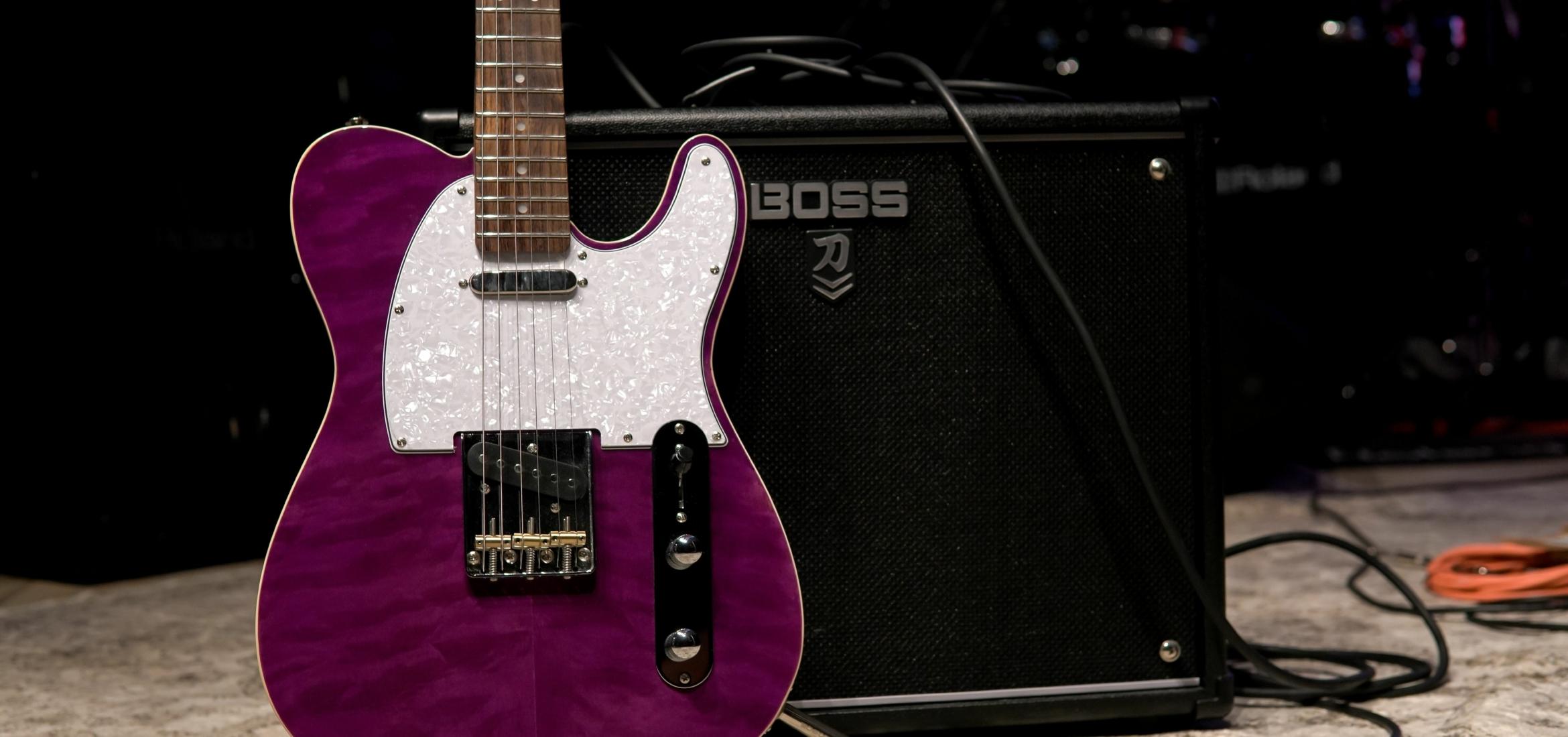
Guitar amplifiers do much more than make an electric guitar louder. They shape the attack, sustain, distortion, frequency balance, and even the way the instrument feels under your fingers. A good guitar amp can make practice more enjoyable, help you discover your style, and give a simple guitar part the character it needs.
However, choosing your first amp can be confusing. You will see tube amps, solid-state amps, modeling amps, combos, stacks, different speaker sizes, and wattage ratings that do not seem to follow normal logic. This guide explains those choices from the ground up.
Table of Contents
- What Does a Guitar Amp Actually Do?
- The Main Types of Guitar Amplifiers
- Combo Amp or Head and Cabinet?
- Choosing Guitar Amplifier Wattage
- Speaker Size and Cabinet Design
- Controls and Features That Actually Matter
- Match the Guitar Amp to Your Music
- How to Test Guitar Amplifiers Before Buying
- Common Beginner Mistakes
- A Simple Guitar Amp Buying Checklist
- Choosing Your Guitar Amp: Final Advice
What Does a Guitar Amp Actually Do?
A guitar amp receives the weak electrical signal produced by your guitar pickups, increases its level, shapes its tone, and sends it to a speaker. That sounds simple, but every stage changes the result.
Most guitar amplifiers contain three main sections:
- Preamp: Raises the guitar signal and provides most of the gain, EQ, and channel controls.
- Power amp: Supplies enough power to drive the speaker. It can also add compression and distortion when pushed.
- Speaker and cabinet: Convert the electrical signal into sound and strongly influence the final frequency response.
This is important because the amplifier is not a neutral playback system. A studio monitor tries to reproduce audio accurately. A guitar amp is designed to color the signal in a musically useful way.
That is why the same guitar can sound bright and sharp through one amp, dark and thick through another, and almost like a different instrument through a third.
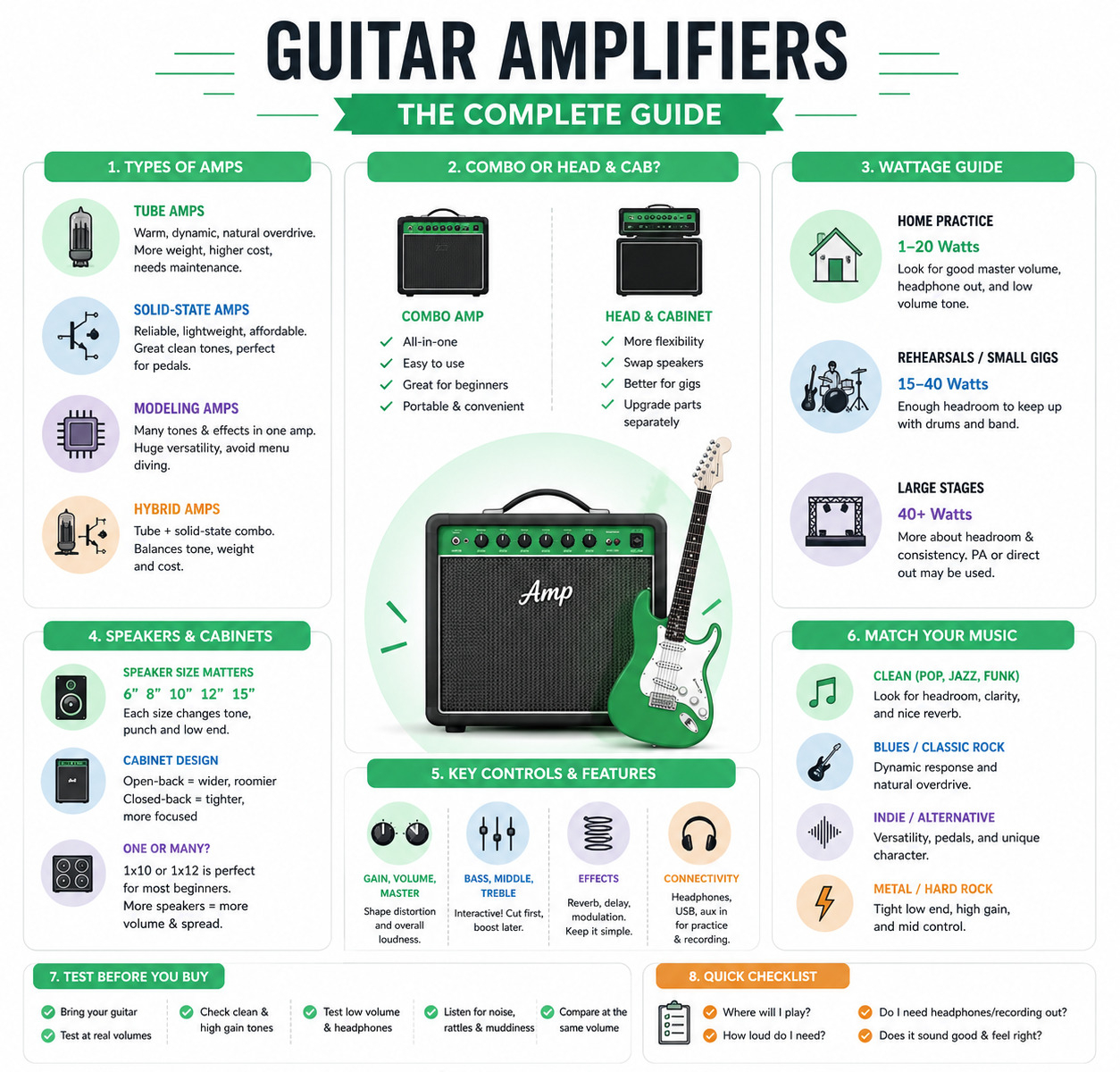
The Main Types of Guitar Amplifiers
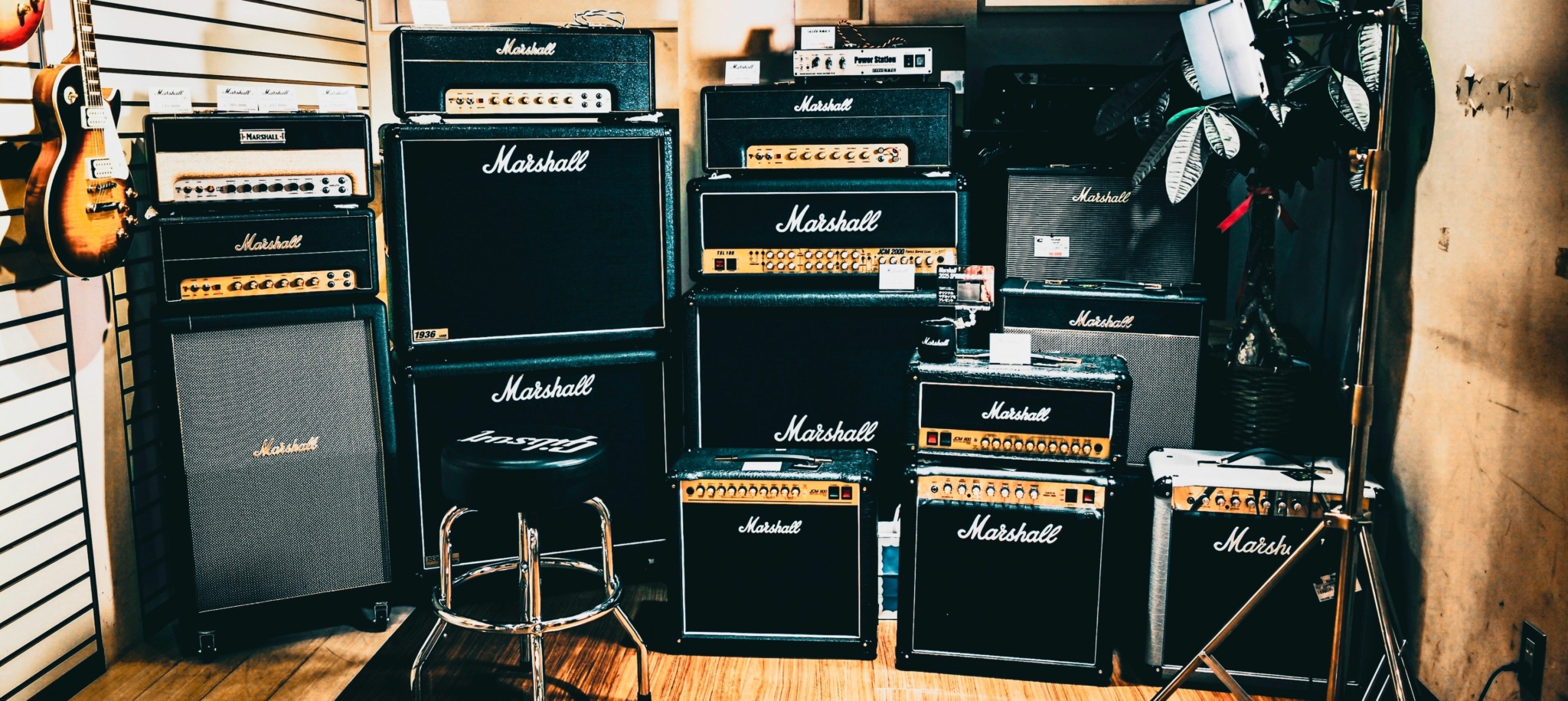
The first major choice is the technology used to amplify the signal. The four common categories are tube, solid-state, digital modeling, and hybrid amps.
Tube Guitar Amplifiers
Tube amplifiers, also called valve amps, use vacuum tubes in the preamp, power amp, or both. Players often describe them as warm, dynamic, and responsive.
In practice, a tube amp often changes character with your playing. Pick gently and it may stay clean. Hit the strings harder and it can add compression, harmonics, and mild overdrive. This response suits styles where the transition between clean and distorted sounds matters.
Advantages of tube amps include:
- Natural-sounding overdrive
- Strong response to picking dynamics
- Familiar tones heard on many classic recordings
- Simple controls on many traditional designs
Disadvantages include:
- More weight
- Higher purchase and maintenance costs
- Tubes eventually need replacement
- Great overdrive may require more volume than your room allows
A low-watt tube amp can still be extremely loud. Therefore, do not assume that a 5-watt amp is automatically suitable for quiet apartment practice. A master-volume control, power reduction mode, or attenuator may matter more than the headline wattage.
[31†embed_image]
The Marshall DSL40CR is a 40-watt tube combo with a 12-inch speaker, multiple gain modes, and switchable power settings. It shows how a modern tube amp can combine traditional overdrive with more flexible controls.
Solid-State Guitar Amplifiers
Solid-state amps use transistor-based electronics instead of vacuum tubes. They are generally lighter, more affordable, and less maintenance-intensive than traditional tube designs.
Solid-state distortion once had a reputation for sounding hard or fizzy, but that view is outdated. Modern designs range from basic practice units to professional amps with excellent clean tones and convincing overdrive.
Solid-state amps are especially practical when you want:
- Reliable performance
- Low weight
- Good sound at quiet volume
- Plenty of clean headroom
- A lower price for a given power level
They are also useful for pedal-based setups. If you create distortion with pedals, you may prefer an amp that stays clean and predictable rather than adding its own power-stage breakup.
For a beginner, a straightforward solid-state combo can be one of the safest choices. You can plug in, learn what the controls do, and spend more time playing than configuring equipment.
Digital Modeling Amps
Modeling amps use digital signal processing to reproduce the behavior of different amplifiers, speaker cabinets, microphones, and effects. One unit might offer sparkling clean sounds, vintage crunch, modern high gain, delay, reverb, chorus, and compression.
Their biggest advantage is variety. A beginner can explore clean, vintage crunch, and modern high-gain tones without buying several amplifiers and pedals. The downside is distraction: it is easy to spend more time changing presets than practicing.
My advice is simple: choose a modeling amp with a clear physical interface. You should be able to adjust gain, volume, bass, middle, and treble without opening an app. Deeper editing can be useful later, but basic operation should remain immediate.
Fender’s overview of choosing a modeling amp is a useful example of how power, presets, controls, and intended use fit together.
Hybrid Guitar Amps
Hybrid amps combine tube and solid-state or digital stages. A common design places a tube in the preamp for character while using a solid-state power amp for efficiency and lower weight.
The word hybrid does not guarantee a particular sound. One tube in the signal path does not automatically create the behavior of a fully driven tube amp. Choose a hybrid because you like its sound and controls, not because its specification includes a tube.
Combo Amp or Head and Cabinet?
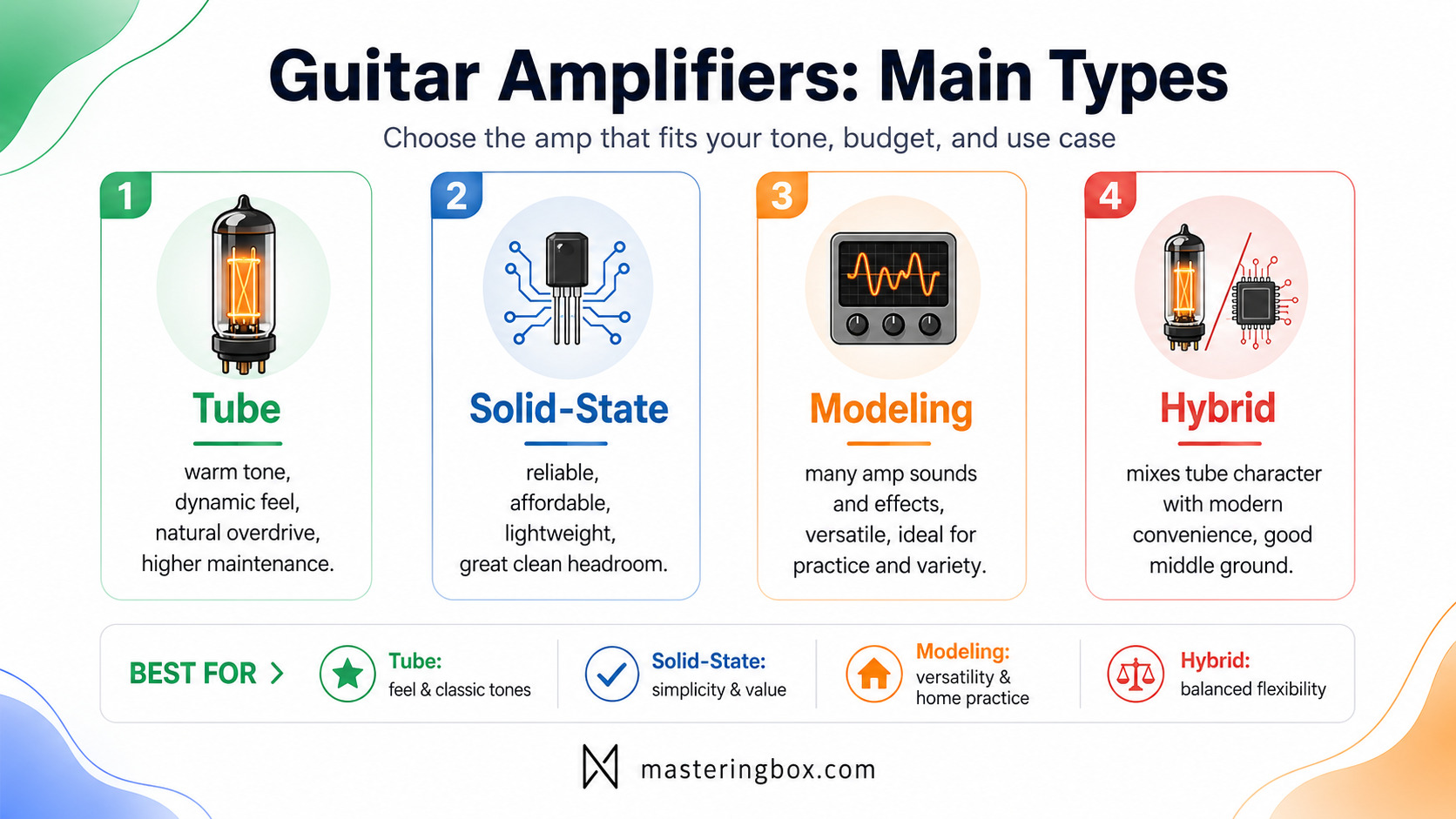
The next decision is physical format. A combo amp places the electronics and speaker in one enclosure. A head-and-cabinet setup separates the amplifier from the speaker cabinet.
For most beginners, a combo is the easier option. It is already matched, requires fewer cables, takes up less space, and is usually easier to carry.
A separate head and cabinet gives you more flexibility. You can swap speakers, upgrade one part, or travel with a compact head. The trade-offs are cost, storage, and the need to understand speaker impedance and power handling. A detailed combo versus head-and-cab comparison can help when you are ready to explore modular rigs.
Why Combos Usually Make Sense for Beginners
A combo lets you focus on playing. The manufacturer has already selected a speaker that works with the amp, and you do not need to calculate an impedance match before making sound.
A combo is usually best when you:
- Practice at home
- Travel to lessons
- Have limited storage
- Want one item to carry
- Do not plan to experiment with cabinets
When a Head and Cabinet Is Worth Considering
A separate rig becomes more attractive when you already understand the type of tone you want or regularly play through larger cabinets.
Consider a head-and-cab setup when you:
- Rehearse or perform regularly
- Want to swap speakers or cabinet sizes
- Need a compact head for travel
- Already have access to suitable cabinets
- Want to upgrade the amp and speaker independently
Never connect a tube amp head to an unsuitable cabinet or operate it without the correct speaker or load connected. Always follow the impedance and connection instructions printed on the amplifier.
Choosing Guitar Amplifier Wattage
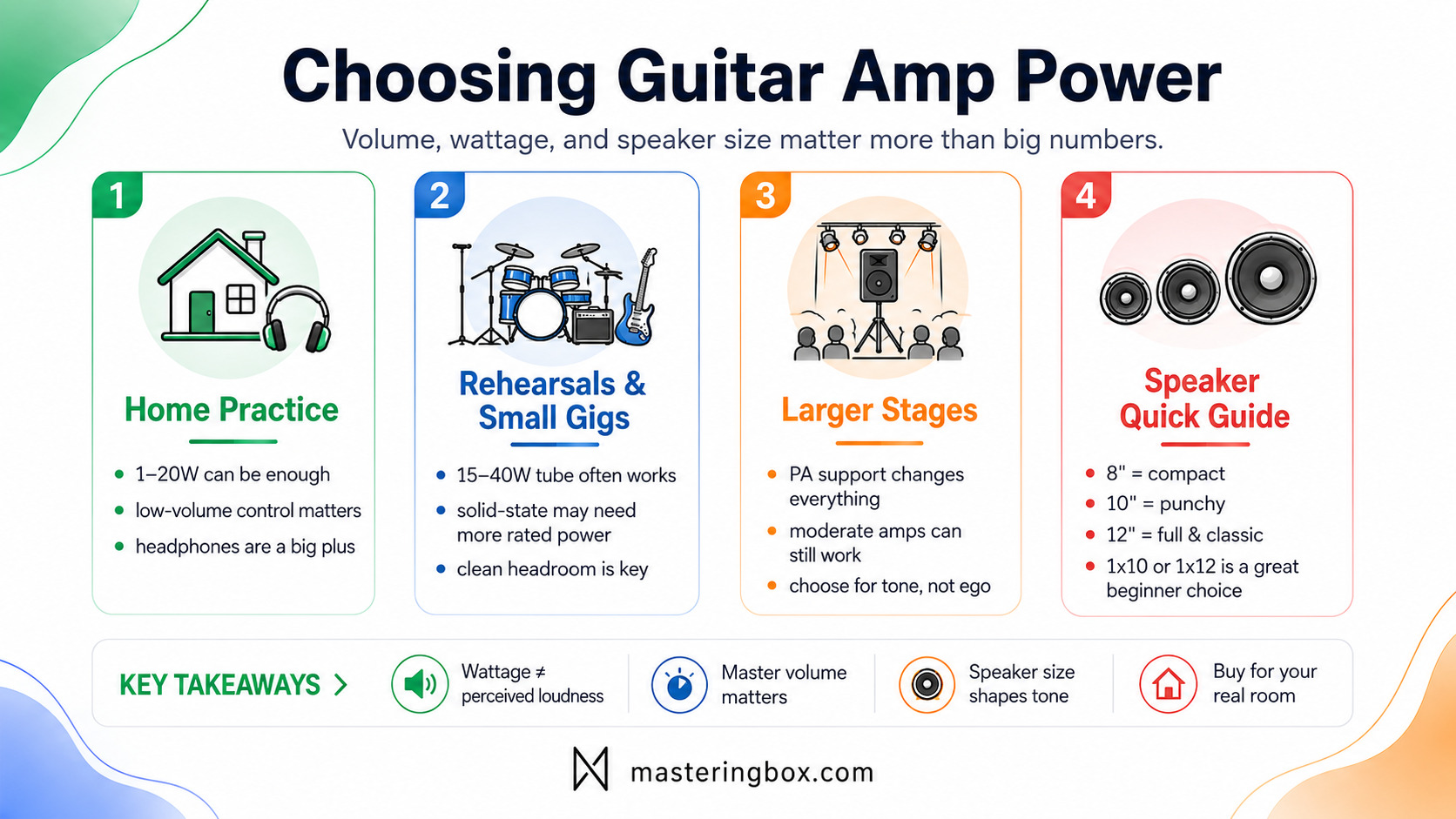
Wattage is one of the most misunderstood specifications on guitar amplifiers. It measures electrical power, not perceived loudness or sound quality.
A 100-watt amp is not ten times as loud as a 10-watt amp. In idealized terms, multiplying power by ten produces roughly a 10 dB increase before other factors are considered. Speaker sensitivity, cabinet design, distortion, frequency content, and room acoustics also affect what you hear.
That means a low-watt tube amp through an efficient 12-inch speaker can sound much louder than expected. Meanwhile, a small digital amp may provide excellent low-volume control even with a higher advertised wattage.
Marshall’s beginner amp guide also emphasizes matching the amplifier to how and where you will use it rather than chasing the largest number.
Home Practice
For home practice, control at low volume matters more than maximum output.
Look for:
- A usable master-volume control
- Headphone output
- Power reduction or low-power mode
- Speaker-emulated output
- Aux input or Bluetooth audio
- Good tone without turning the amp up
A 1- to 20-watt amp may be enough, but wattage alone does not determine whether it works quietly. Test the volume control near its lowest settings. Some powerful amps jump from silent to too loud with a tiny movement of the knob.
Rehearsals and Small Gigs
When playing with a drummer, you need enough clean headroom or controlled distortion to remain audible in the mix.
A 15- to 40-watt tube combo can be enough for many rehearsals and small shows. Solid-state and modeling amps may use higher ratings to achieve a similar practical level. However, this varies greatly between models.
If the venue microphones the amp or accepts a direct output, you may not need a huge amplifier on stage.
Larger Stages
On a larger stage, consistency and monitoring become more important than raw wattage. Many professional players use moderate-power amps, modeling systems, or load boxes and send the signal to the PA.
A 100-watt head still has a place when its headroom and power-stage behavior are part of the sound. It should be a deliberate tonal choice, not the automatic definition of a professional rig.
Speaker Size and Cabinet Design
The speaker is not a minor accessory. It is one of the strongest tone-shaping elements in the entire guitar rig.
Common guitar speaker sizes include 6, 8, 10, and 12 inches. A larger speaker does not automatically mean better sound. It usually changes the balance, efficiency, dispersion, and low-frequency behavior.
As a general tendency:
- 6- and 8-inch speakers: Compact and focused, with less deep bass
- 10-inch speakers: Fast and punchy, often with controlled low end
- 12-inch speakers: Full and familiar, with the broad character associated with many classic guitar recordings
- 15-inch speakers: Larger low-frequency presentation and a different attack
The exact model matters as much as diameter. Two 12-inch speakers can sound dramatically different because of their construction, sensitivity, and frequency response.
Bobby Owsinski provides a useful technical introduction to why guitar amp speakers sound different, including the effects of cone size, power handling, and magnet construction.
[39†embed_image]
The Orange Crush 12 uses a compact 6-inch speaker. It is a good example of an amplifier designed around portability and focused practice volume rather than deep cabinet bass.
Open-Back and Closed-Back Cabinets
Cabinet construction changes how the speaker interacts with the room.
An open-back cabinet radiates sound from the front and rear. It often feels wider and more room-filling, especially when you stand near the amp.
A closed-back cabinet directs more energy forward and often feels tighter in the low mids and bass. Neither design is universally better; choose according to the room and the way the amp sits with other instruments.
One Speaker or Several?
Adding speakers changes cone area, dispersion, coupling, and cabinet resonance. A 2×12 may feel broader than a 1×12, while a 4×12 can sound physically imposing but is heavy and often unnecessary for modern venues.
For most beginners, a good 1×10 or 1×12 combo offers a practical balance of size, tone, and volume.
Controls and Features That Actually Matter
A long feature list can make an amp look impressive, but a few controls determine whether it is enjoyable every day.
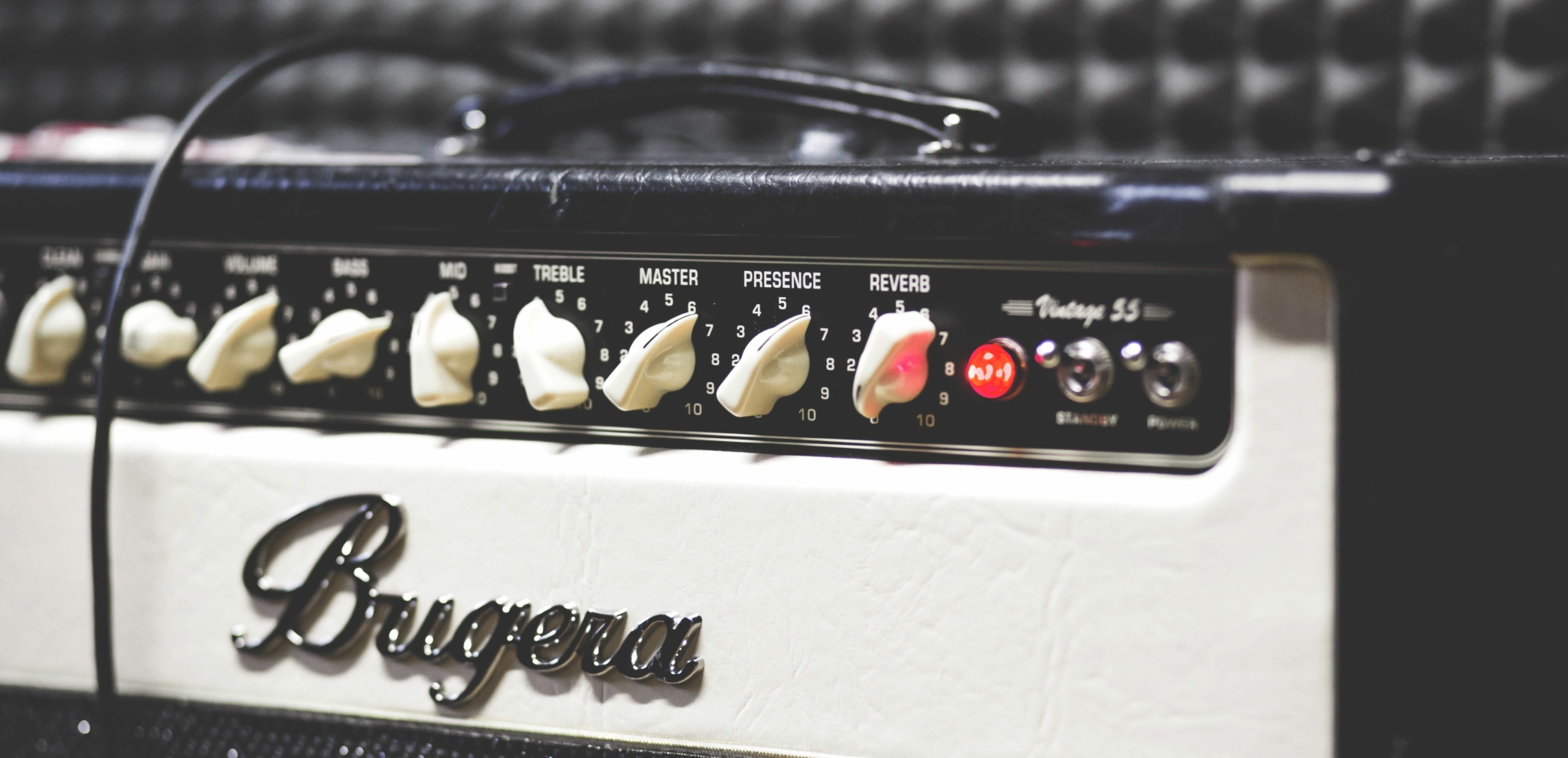
Gain, Volume, and Master Volume
These controls are related but not identical.
- Gain controls how strongly the preamp is driven. More gain usually means more distortion and compression.
- Channel volume sets the level of a particular clean or drive channel.
- Master volume controls the overall signal sent toward the power amp.
A master-volume amp can create preamp distortion at a lower listening level, although it may not sound identical to a power amp and speaker being pushed hard.
Bass, Middle, and Treble
The EQ controls on guitar amplifiers are highly interactive. Setting every knob to noon is a starting point, not a neutral reference.
Try this beginner method:
- Set bass, middle, and treble to the middle.
- Choose a comfortable gain level.
- Reduce any frequency range that feels excessive.
- Make small boosts only after cutting the obvious problem.
- Recheck the sound while playing with a backing track.
A tone that sounds huge alone may disappear in a band. Excessive bass can make the amp feel impressive in a bedroom but compete with the bass guitar and kick drum in a mix.
Reverb and Built-In Effects
Reverb can add depth without extra pedals. Delay, chorus, tremolo, and modulation are also useful, but usability matters more than quantity. A few effects you can adjust quickly may be better than 100 presets hidden in menus.
Headphone and Recording Outputs
A headphone output is valuable for beginners. Check whether it mutes the speaker and includes cabinet simulation, because a raw preamp signal can sound harsh. USB audio or a speaker-emulated line output can also simplify recording.
Remember that a headphone output, line output, and speaker output are not interchangeable. Never connect a powered speaker output directly to an audio interface unless the amplifier is specifically designed for it.
Match the Guitar Amp to Your Music
Genre labels are not strict rules, but they can help narrow the search.
Clean, Pop, Funk, and Jazz
For clean styles, prioritize headroom, clarity, and a speaker that stays controlled. You may want onboard reverb and an EQ section that lets you reduce harshness without losing definition.
A solid-state amp can be excellent here. Tube amps are also popular, but make sure the model stays clean at the volume you need.
Blues and Classic Rock
For blues and classic rock, the transition from clean to overdrive often matters more than maximum gain.
Look for an amp that responds to the guitar’s volume knob and your picking strength. A low- or medium-gain tube amp is the traditional choice, but modern solid-state and modeling amps can also provide convincing dynamic crunch.

Indie and Alternative
These styles can use clean pedal platforms, small amps driven hard, modeling amps, or unusual speakers. Decide whether you need clean effects, loose vintage distortion, tight modern gain, or deliberate lo-fi character.
Metal and Heavy Rock
For metal, prioritize a tight low end, enough gain, useful midrange control, and a speaker or cabinet that remains defined.
More gain is not always better. Too much distortion blurs fast picking and chord separation. Start with less gain than expected and reduce muddy bass.
How to Test Guitar Amplifiers Before Buying
Specifications narrow the options, but your ears make the final decision. Bring your own guitar when possible because pickups strongly affect the result.
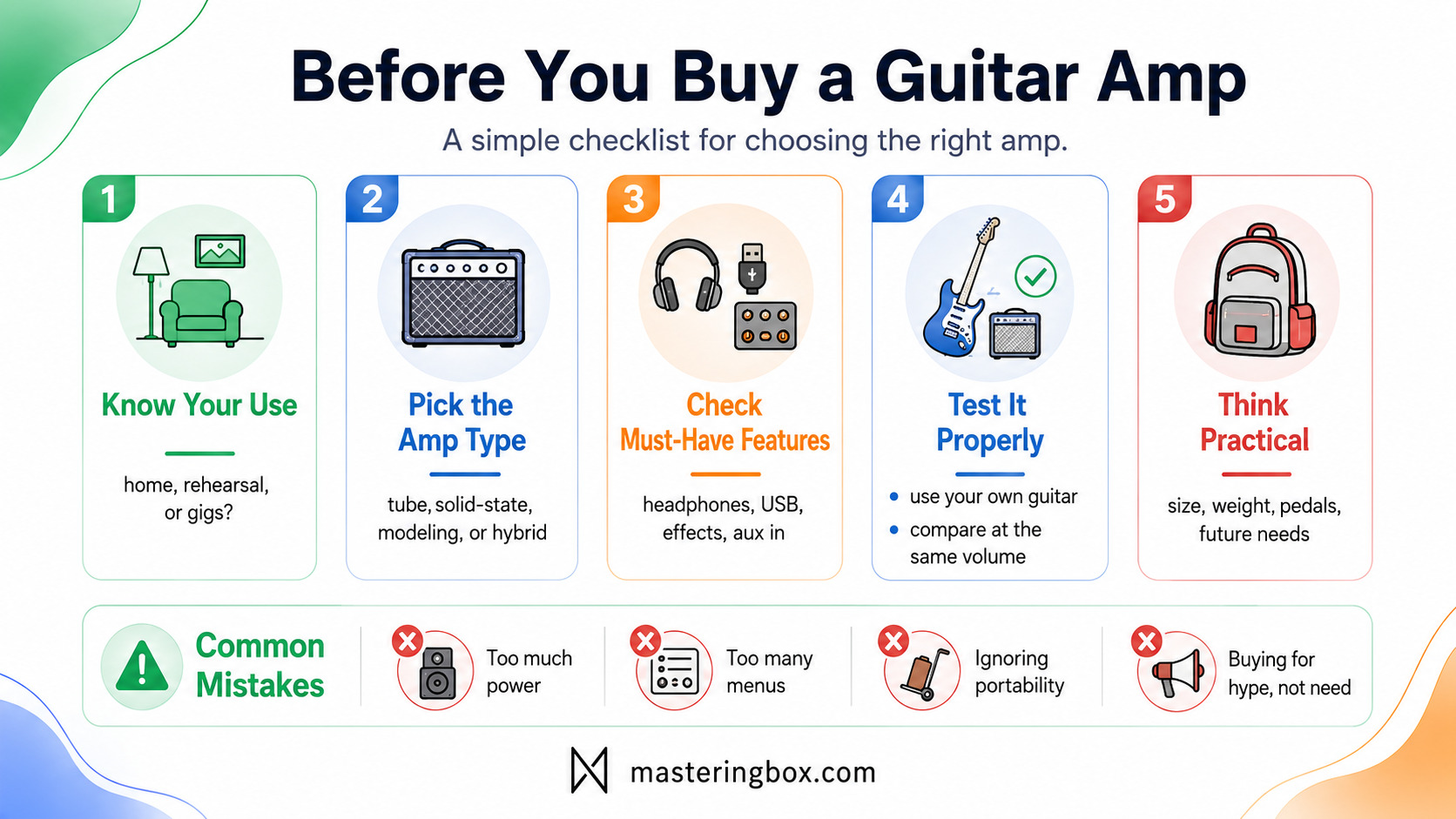
Use this process:
- Start with all effects off.
- Test the clean sound at realistic volume.
- Increase gain gradually.
- Check the lowest usable volume.
- Test the headphone output if you need silent practice.
- Try your most common chord shapes and picking styles.
- Listen for noise, rattles, harshness, and muddy bass.
- Compare amps using similar volume levels.
Match the volume when comparing models. The slightly louder amp often sounds more exciting even when its tone is not better.
Common Beginner Mistakes
The wrong buying strategy can leave you with an amp that is impressive for five minutes but inconvenient for years.
Avoid these mistakes:
- Buying far more power than your room can handle
- Choosing by brand reputation alone
- Assuming tubes are always superior
- Ignoring weight and portability
- Buying a modeling amp with an interface you dislike
- Judging tone only at store volume
- Forgetting headphone or recording needs
- Expecting the amp to fix poor technique or tuning
Do not buy for an imaginary future stadium tour. Choose for the next year and upgrade later with more knowledge.
A Simple Guitar Amp Buying Checklist
A checklist helps you separate useful features from marketing noise.
Before buying, answer these questions:
- Where will I play most often?
- How quietly must I practice?
- Will I rehearse with a drummer?
- Do I prefer one strong core tone or many sounds?
- Do I need headphones, USB, Bluetooth, or an aux input?
- Can I carry the amp comfortably?
- Do I plan to use pedals?
- Does it sound good with my own guitar?
- Can I adjust it quickly without an app?
- Will it still fit my likely needs next year?
For many beginners, the answer will be a compact solid-state or modeling combo with a headphone output, simple controls, and an 8- to 12-inch speaker. Players who already love the feel of natural overdrive may prefer a low-watt tube combo with good volume control.
Choosing Your Guitar Amp: Final Advice
Choosing between guitar amplifiers becomes much easier when you stop looking for the universally “best” model. The best guitar amp is the one that fits your space, playing style, volume requirements, and willingness to manage extra features.
Start with practical needs. Decide where you will use it, how loud you can play, and whether you want one core sound or a collection of tones. Then compare amplifier types, speaker sizes, controls, and connectivity.
Most importantly, choose an amp that makes you want to pick up the guitar. Technical specifications matter, but inspiration matters too. A modest guitar amp that you enjoy every day is a better purchase than an expensive rig that is too loud, too complicated, or too heavy to use. For another beginner-friendly overview of the main buying factors, Fender also publishes a useful guitar amp buying guide.
O autorze

Dídac
CEO i założyciel MasteringBOXDídac to profesjonalny inżynier dźwięku, producent muzyczny oraz inżynier oprogramowania. Jest założycielem MasteringBOX i autorem wielu artykułów na blogu.
Zostaw komentarz
Zaloguj się, aby skomentować
 English
 Español
 Français
 Italiano
 Deutsch
 Português
 Nederlands
 Svenska
 Polski
 Čeština